
Your sales team burns 72% of their time on manual prospecting.
AI-powered qualification cuts that research by around 80% and lifts conversion rates from the industry
average of 13% to 25-35%. We’re going to discuss in this article about MQL vs SQL vs SAL and what changes when you treat lead stages as automation triggers instead of abstract theory.
Here are few notable things to take away:
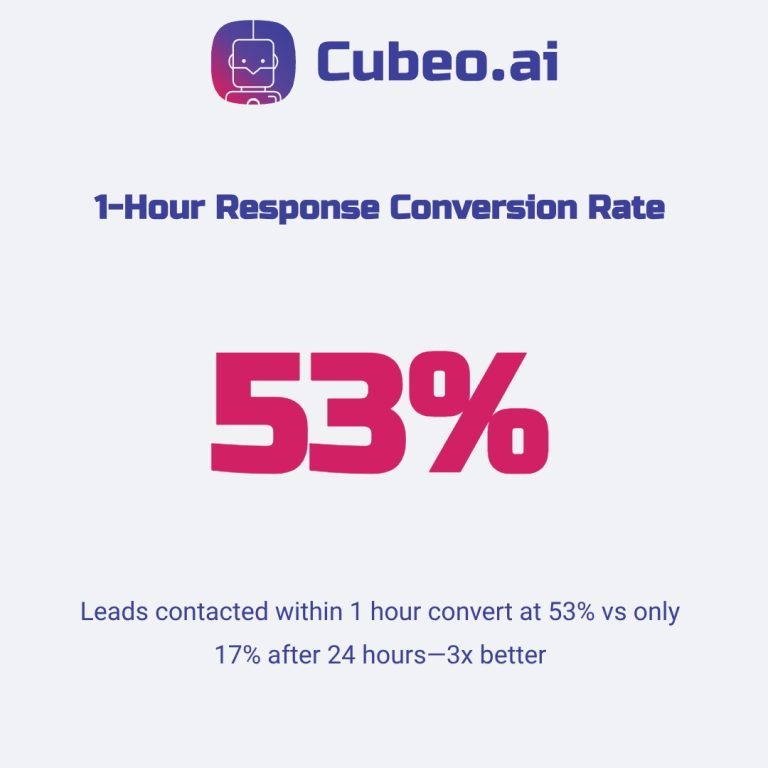
• Speed determines revenue: Leads contacted within one hour convert at 53%; wait 24
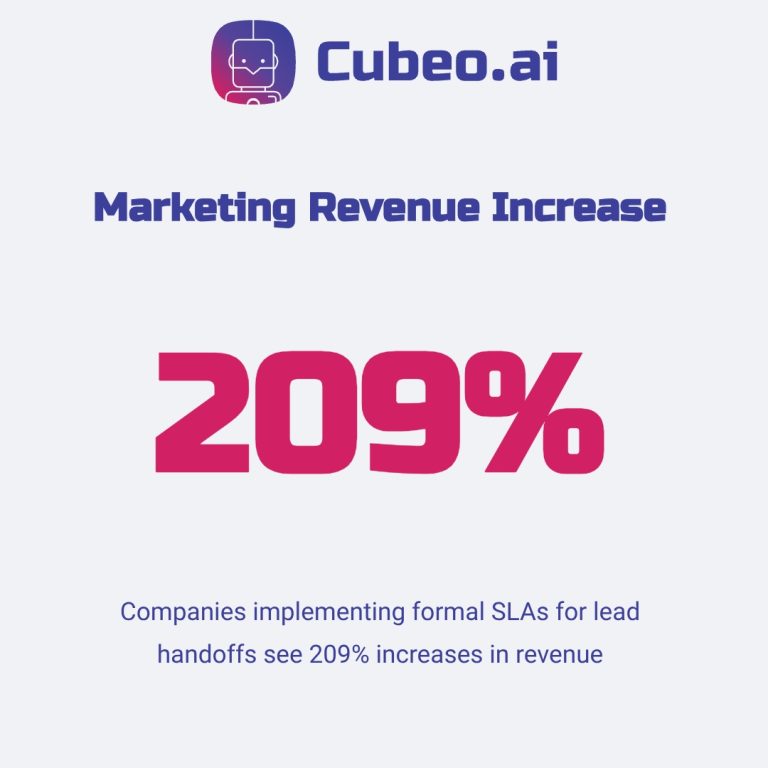
hours and that drops to 17%. Formal SLAs with automated routing drive 209% increases in
marketing-generated revenue.
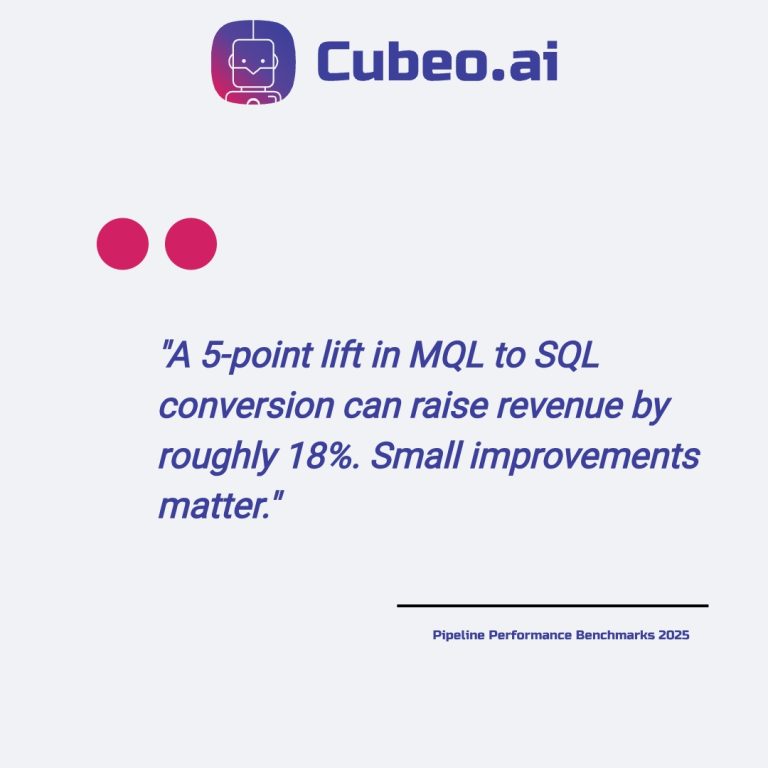
• Small improvements compound fast: A 5-point lift in MQL→SQL conversion can raise
revenue by roughly 18%. Automated scoring improves qualification rates by 192% compared
to manual processes.
• SAL is your profit lever: The Sales Accepted Lead checkpoint (where machine
confidence meets quick human review) stops 61% of unqualified leads from wasting rep
time while protecting the 27% that actually convert.
• Deploy production thresholds today: Score ≥50 triggers MQL nurture, ≥75 routes to 24-
hour SAL review, ≥85 auto-assigns SQL to reps with 4-hour contact SLA. This framework
saves 10-30 minutes per lead and eliminates handoff friction.
Below, you’ll find the complete scoring model, SLA rules, and CRM automation checklist to
halve your response time and lift MQL→SQL conversion this month.
Leads Aren't the Problem; Bad Qualification Is
Your reps waste roughly 72% of selling time on manual prospecting. AI-powered qualification cuts that research by around 80%, yet most teams treat lead stages as abstract theory instead of production workflows.
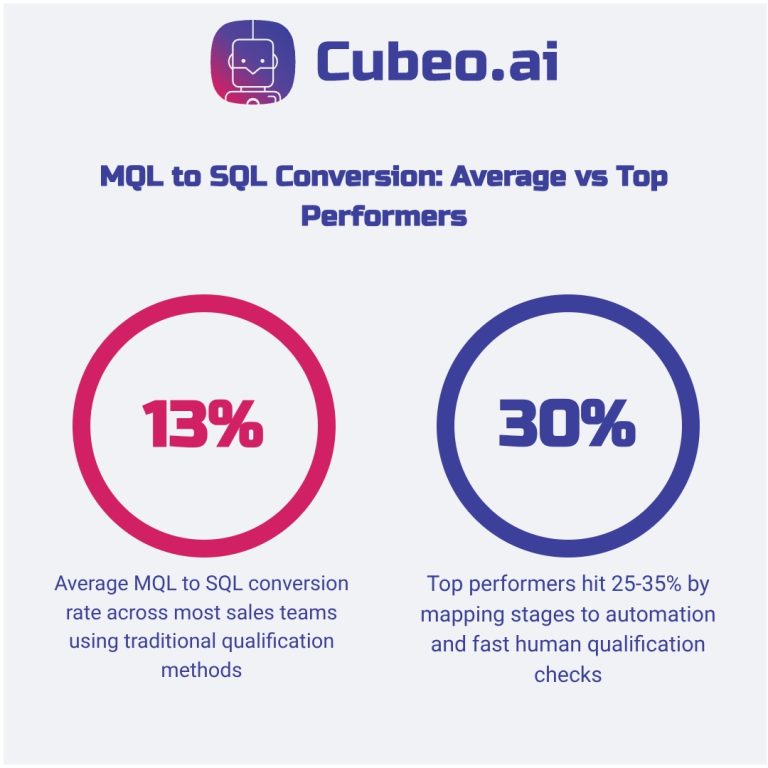
The average MQL→SQL conversion sits at 13%—top performers hit 25-35% by mapping stages to deterministic automation and fast human checks.
Treat SAL as the critical checkpoint where machine confidence meets quick human review.
When you define MQL, SAL, and SQL as automation triggers, you stop chasing volume and
start lifting conversion.
What Are MQL SAL and SQL
Treat these stages as automation checkpoints to cut manual research and lift MQL→SQL conversion. Poor handoff execution costs teams 22% of potential SQLs annually. When you map stages to scoring thresholds and SLA reviews, 92% of leads move forward and 82% close. Below are operational definitions and triggers.
MQL (Marketing Qualified Lead)
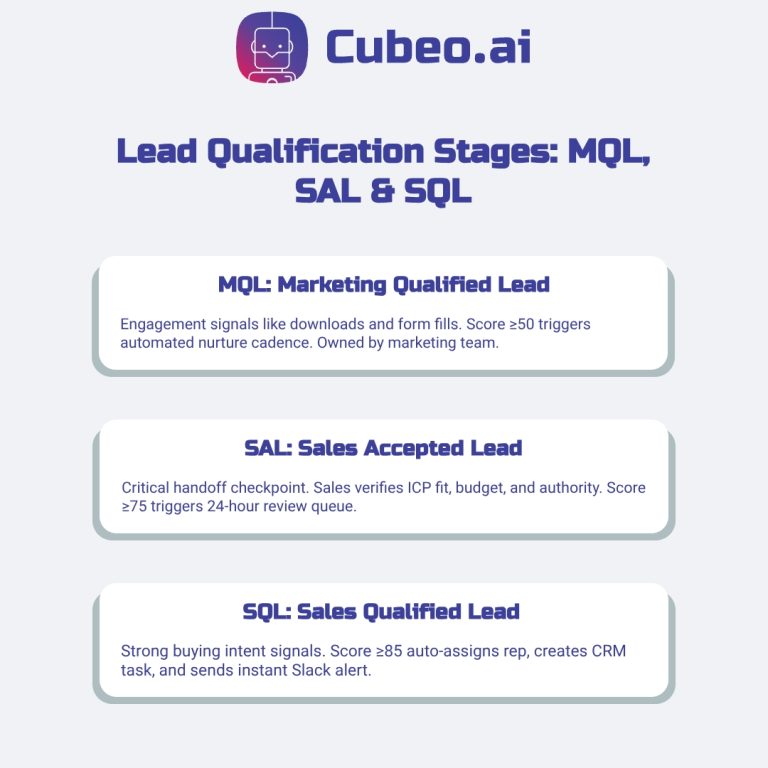
Engagement signals (downloads, opens, forms). Score ≥50 triggers MQL, enters automated nurture cadence. Owned by marketing.
SAL (Sales Accepted Lead)
Critical handoff: sales verifies ideal customer profile (ICP), budget, authority. Score ≥75 triggers 24-hour review queue.
SQL (Sales Qualified Lead)
Buying intent (pricing, demos, competitor research). Score ≥85 plus intent auto-assigns rep, creates CRM task, sends Slack alert.
How MQL SAL and SQL Differ
These stages are checkpoints with different intent, owner, and automation action. 68% of sales teams use lead qualification workflows weekly for scoring and routing. Yet 61% of marketers send all leads to sales when only 27% are actually qualified. Use clear thresholds so marketing nurtures prospects, sales triages borderline fits, and reps get high-confidence contacts.
| Stage | Intent Level | Engagement Type | Owner | Automation Action |
|---|---|---|---|---|
| MQL | Passive interest | Content consumption | Marketing | Nurture Sequence |
| SAL | Budget/authority signals | Initial sales review | Sales | Review queue (24h SLA) |
| SQL | Active buying intent | Pricing/demo requests | Sales | Rep assignment (4h SLA) |
Intent Signals by Stage
MQL shows passive engagement: downloads, clicks, webinar attendance.
SAL demonstrates ICP match plus budget and authority flags surfaced during enrichment—requires quick human verification.
SQL exhibits explicit buying signals like demo requests, pricing questions, competitor research. Leads contacted within one hour convert at 53% versus 17% after 24 hours.
MQL to SQL Conversion Benchmarks
MQL→SQL varies by sector and source. Overall conversion typically runs 15-21%, with top B2B SaaS near 39%. MQL→SAL usually hits 30-40%; SAL→SQL about 40-50%.
Small improvements matter: a 5-point lift in MQL→SQL can raise revenue by roughly 18%. Below are sector benchmarks and measurement rules to track progress.
Industry Conversion Benchmarks
| Sector | MQL→SQL | Key Driver |
|---|---|---|
| B2B SaaS | 39% | Advanced scoring, tight ICP |
| Consumer Electronics | 21% | Shorter cycles |
| FinTech | 19% | Compliance complexity |
| Healthcare | 13% | Long cycles, committees |
| Pharma | 21% | Rigorous qualification |
Variance reflects deal complexity and buying committee size.
Measuring Conversion Success
Calculate: (SQLs ÷ MQLs) × 100.
For 90-120 day cycles, compare month 3 SQLs to month 1 MQLs. Track stage velocity (MQL→SAL, SAL→SQL) and false-positive rate at SAL. Monitor weekly trends, run monthly cohort analysis.
Automating Lead Qualification
Manual qualification consumes time reps could spend selling. AI-powered enrichment and scoring cut review time from hours to seconds.
Enrichment auto-fills contact and firmographic data. Scoring ranks prospects by conversion likelihood using weighted criteria. Automation triggers route leads: MQL enters nurture sequence, SAL goes to sales review queue, SQL gets auto-assigned to reps.
Translation: this saves reps 10-30 minutes per lead and increases handoff confidence.
Data Enrichment for Qualification
Enrichment agents auto-fill email, phone, job title, company revenue, and tech stack. High data completeness improves scoring accuracy by validating ICP alignment before ranking.
Companies using lead scoring see up to 70% increases in lead generation ROI.
Enrichment reduces manual research from hours to minutes per lead, letting reps focus on conversations instead of data hunting.
Executing Seamless Handoffs
Handoff friction costs deals. Put these two rules in place today: SAL review ≤24 hours; SQL contact ≤4 hours—automated, monitored, attached with full context. Companies implementing formal SLAs see 209% increases in marketing-generated revenue (OnSilent recommends aggressive 2-hour windows; we set practical 4-hour targets for most teams).
CRM automation routes leads instantly. Context transfers include enrichment data, engagement history, scoring breakdown.
Service Level Agreement Best Practices
- MQL criteria: Score threshold (≥50) plus engagement signals (downloads, email opens)
- SAL review: ≤24 hours from MQL status
- SQL response: ≤4 hours from qualification
- Feedback loop: Weekly marketing-sales sync to refine criteria using closed-won patterns
- Monitor: Track SAL false-positive rate and SLA breach %; alert when false-positives exceed 15%
Automated Handoff Workflows
- Trigger: SQL qualified → auto-assign rep by territory or product expertise
- Instant actions: Slack notification fires + CRM task created with contact SLA deadline
- Context transfer checklist: Enrichment data (firmographics, tech stack), engagement timeline (pages visited, content downloaded), scoring breakdown (fit 40%, engagement 35%, timing 25%)
- Result: Zero information loss between marketing and sales; rep starts conversation with full prospect context
This week: create SAL review queue, set 4-hour SQL SLA alert in your CRM, attach enrichment and scoring to each task.
FAQ
What is the difference between MQL and SQL?
A Marketing Qualified Lead (MQL) is a prospect who has shown interest through marketing activities but isn’t yet ready for a direct sales pitch, while a Sales Qualified Lead (SQL) has demonstrated clear buying intent and is prepared for direct sales engagement. The core distinction lies in their readiness to purchase and their position within the sales funnel.
What is a good MQL to SQL conversion rate?
A good MQL to SQL conversion rate typically falls around 13% to 22% on average, but top-performing B2B SaaS companies can achieve rates as high as 25% to 40%. This rate isn’t a static benchmark; it varies significantly based on industry, the complexity of the buyer’s journey, and the length of the sales cycle.
What is SAL in sales and why does it matter?
A Sales Accepted Lead (SAL) is a Marketing Qualified Lead (MQL) that has been formally reviewed and accepted by the sales team as a prospect worth pursuing. It represents a critical handoff point, bridging the gap between marketing’s lead generation efforts and sales’ direct engagement.
How can I automate lead qualification stages?
Automating lead qualification stages involves leveraging software and data intelligence to capture, score, filter, and route leads based on ideal customer profile (ICP) fit and real-time buying signals, eliminating manual research. This approach unifies marketing and sales processes, ensuring faster response times and higher conversion rates.
For a custom lead qualification complete system, contact Cubeo AI team.