
AI is transforming industries, driving automation, and reshaping decision-making. Yet, many businesses struggle with where to start and how to implement AI effectively for long-term success. Without a strategic approach, AI adoption can lead to wasted investments and poor outcomes.
This guide breaks down:
- How to successfully implement AI in your business
- Key AI use cases across industries
- Challenges of AI adoption and how to overcome them
- Proven strategies to maximize AI’s impact
By the end of this guide, you’ll know exactly how to integrate AI into your business and drive measurable results. Let’s dive in!
Why AI Integration Is Essential for Businesses in 2025
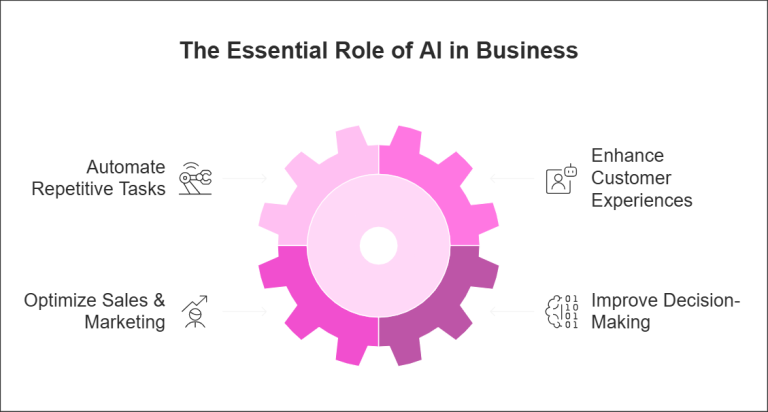
Companies using AI-powered automation see 35% lower operational costs and a 40% increase in productivity. AI-powered solutions help businesses:
- Automate repetitive tasks → Reduce workload and increase efficiency
- Enhance customer experiences → AI chatbots and personalization improve engagement
- Optimize sales & marketing → AI-driven analytics boost lead generation and conversion rates
- Improve decision-making → AI analyzes data faster and more accurately than humans
Related Reading: How AI is Transforming Sales Prospecting
Further Reading: Harvard Business School: Benefits of AI in Business
Step-by-Step Guide to Implementing AI in Your Business
A structured approach ensures smooth AI adoption while avoiding common pitfalls. Follow these steps:
Step 1: Define Your AI Goals & Business Needs
Start by identifying the areas where AI can create the most significant impact in your business.
- What processes slow down your team?
- Where do you need better data insights?
- How can AI enhance customer engagement?
Example: A retail company struggling with inventory management can implement AI-powered demand forecasting to optimize stock levels and reduce costs.
Further Reading: Forbes: How to Effectively Integrate AI into Business Operations
Step 2: Choose the Right AI Tools & Technologies
Selecting the right AI solutions depends on your industry and business model.
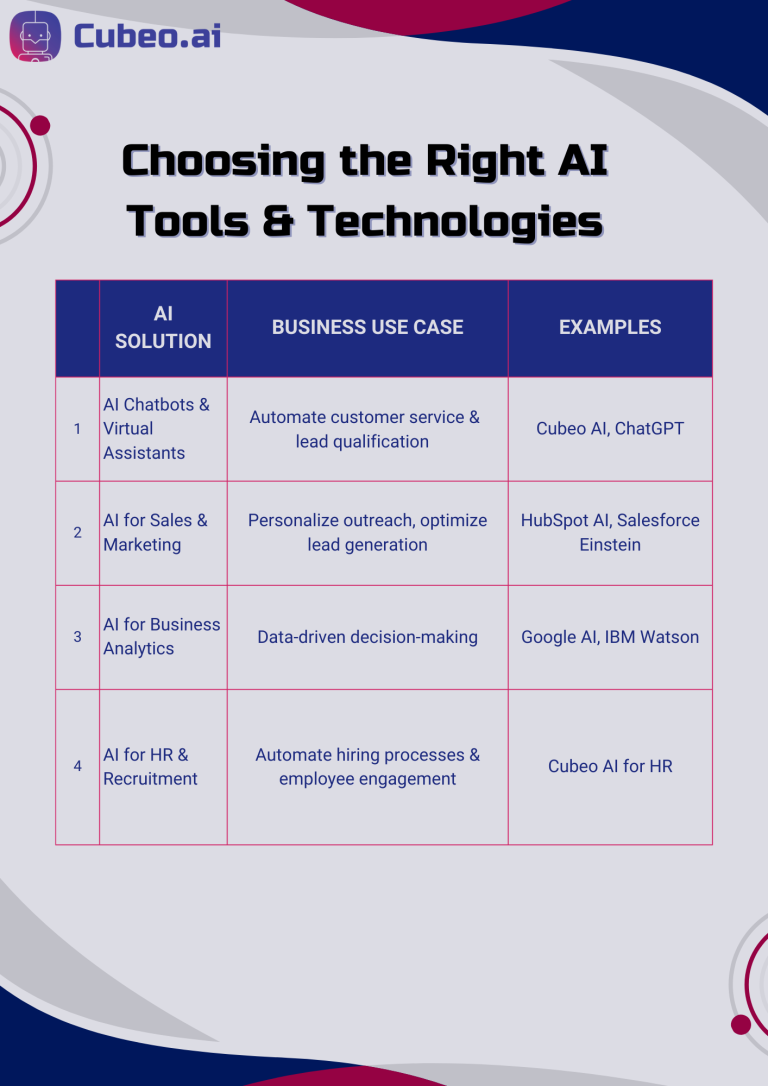
Pro Tip: Start with a low-cost AI solution, then scale based on results.
Related Reading: AI-Powered Lead Generation & Enrichment
Further Reading: GFT: 10 Winning Strategies for AI Integration
Step 3: Build a Strong AI Implementation Plan
AI integration requires a well-defined roadmap to align with business objectives.
- Set Clear KPIs: Define measurable success metrics (e.g., cost savings, lead conversion rates).
- Ensure Team Alignment: Train employees on how AI enhances their roles.
- Test with a Pilot Project: Start small, analyze results, then scale AI across departments.
Example: A logistics company implements AI to optimize delivery routes, reducing fuel costs by 25% before expanding AI use across operations.
Further Reading: Microsoft: Quick Start Guide to AI Implementation
Step 4: Integrate AI into Existing Business Systems
AI works best when it’s seamlessly integrated with existing software and workflows.
- AI for CRM: AI enhances customer data analysis in Salesforce & HubSpot.
- AI for ERP Systems: Automate supply chain & financial forecasting.
- AI for Marketing Automation: AI refines audience segmentation and ad targeting.
Example: An e-commerce store integrates AI with its CRM to auto-classify customer inquiries, reducing response time by 60%.
Further Reading: ITRex: How to Implement AI in Business
Step 5: Optimize AI Performance with Continuous Monitoring
AI models improve over time, but they need constant monitoring to maximize performance.
- Track AI performance regularly → Adjust strategies based on results.
- Gather feedback from employees & customers → Identify AI adoption challenges.
- Update AI models with new data → Ensure continuous learning and optimization.
Example: A SaaS company refines its AI-powered sales automation based on customer interactions, boosting demo bookings by 40%.
📖 Further Reading: European Commission: AI Implementation Guidelines
Common Challenges in AI Adoption (and How to Overcome Them)
- Challenge: Lack of technical expertise
- Solution: Use no-code AI tools like Cubeo AI for simple implementation.
- Challenge: Employee resistance
- Solution: Educate teams on how AI supports, not replaces their roles.
- Challenge: High AI implementation costs
- Solution: Start small with low-cost AI solutions before scaling up.
Example: A small business automates prospecting with Cubeo AI to increase efficiency without hiring additional staff.
Final Thoughts: AI is the Future of Business Growth
AI isn’t just a trend, it’s a long-term business strategy. Companies that integrate AI successfully see higher efficiency, better decision-making, and increased revenue.
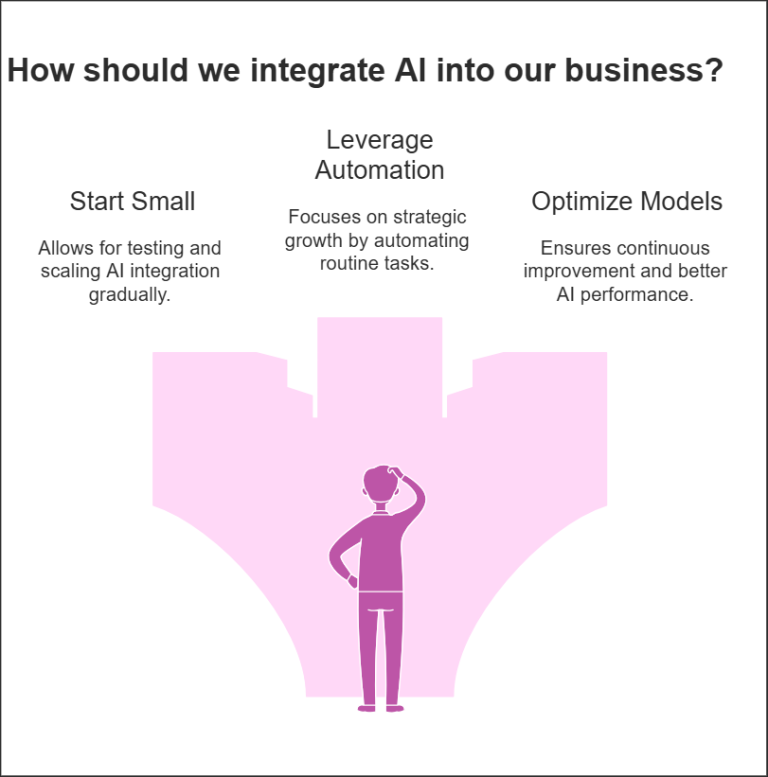
- Start small, test, and scale AI across your business.
- Leverage AI for automation and focus on strategic growth.
- Continuously optimize AI models for better results.
Ready to integrate AI into your business?
Try Cubeo AI today and automate sales, marketing, and operations with AI-driven efficiency!