
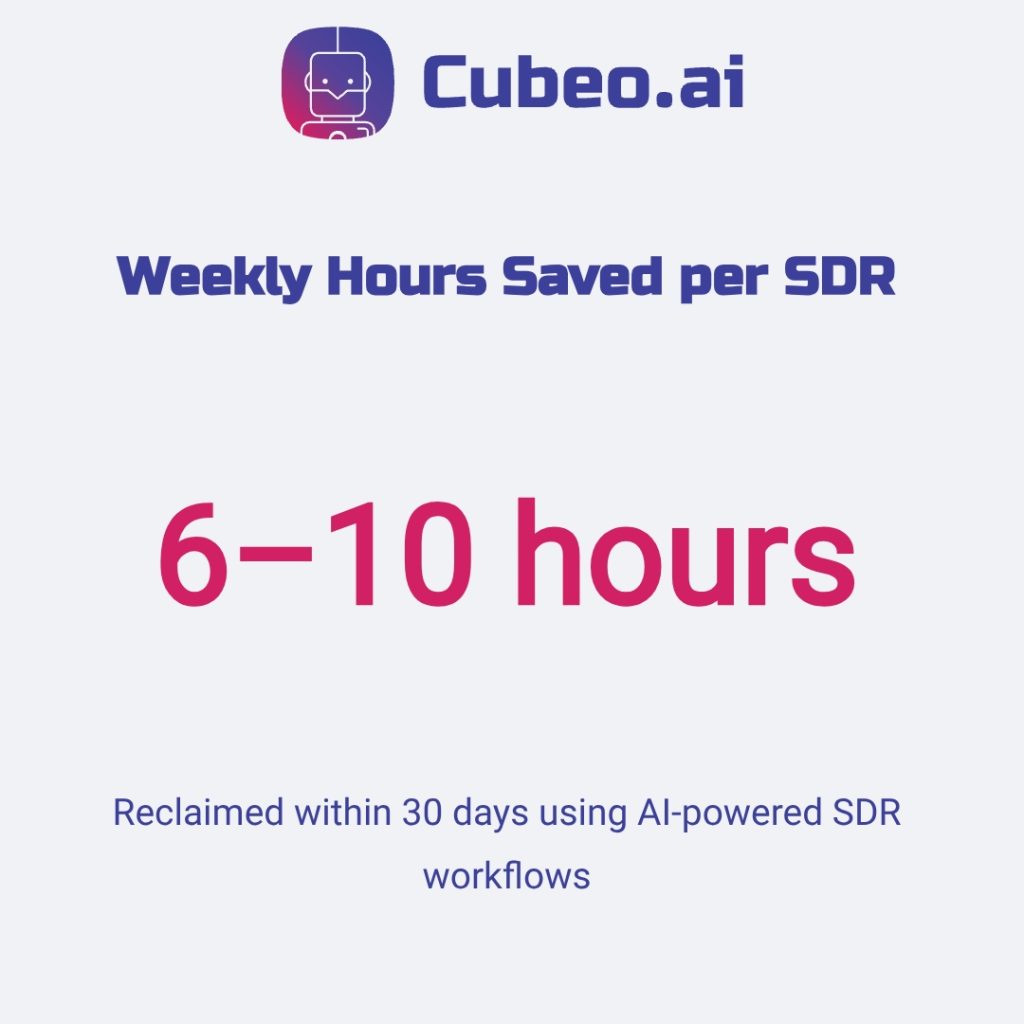
SDRs spend roughly 70% of their time on non-selling tasks (Salesforce State of Sales Report, 2024). Start with Dossier plus Drafting workflows and reclaim six to ten hours per SDR each week within 30 days.
This playbook maps ten specific AI SDR use cases to quantifiable outcomes. Each workflow targets a measurable metric: hours saved, reply-rate lift, or faster meeting conversion. Revenue leaders and RevOps managers get operational detail, not vendor promises.
AI SDR means a system of cooperating agents plus integrations handling repeatable SDR work. Humans own strategy, quality, and relationships. Agents draft emails, enrich accounts, log calls, and propose next actions. You review, approve, and track results.
We organize use cases by SDR workflow stage:
- Discovery identifies high-value accounts worth working
- Research personalizes outreach quickly
- Outreach creates and launches sequences safely
- Nurture manages follow-up and meeting logistics
- Handoff captures intel and routes leads reliably
Lead Discovery and Prioritization
Most SDR mornings start with the same question: who gets my time today?
Daily Prioritizer creates ranked queues based on ICP fit and buying signals. Stakeholder Finder maps the right contacts within target accounts. Both workflows eliminate wasted effort on bad-fit accounts so reps focus where it matters.
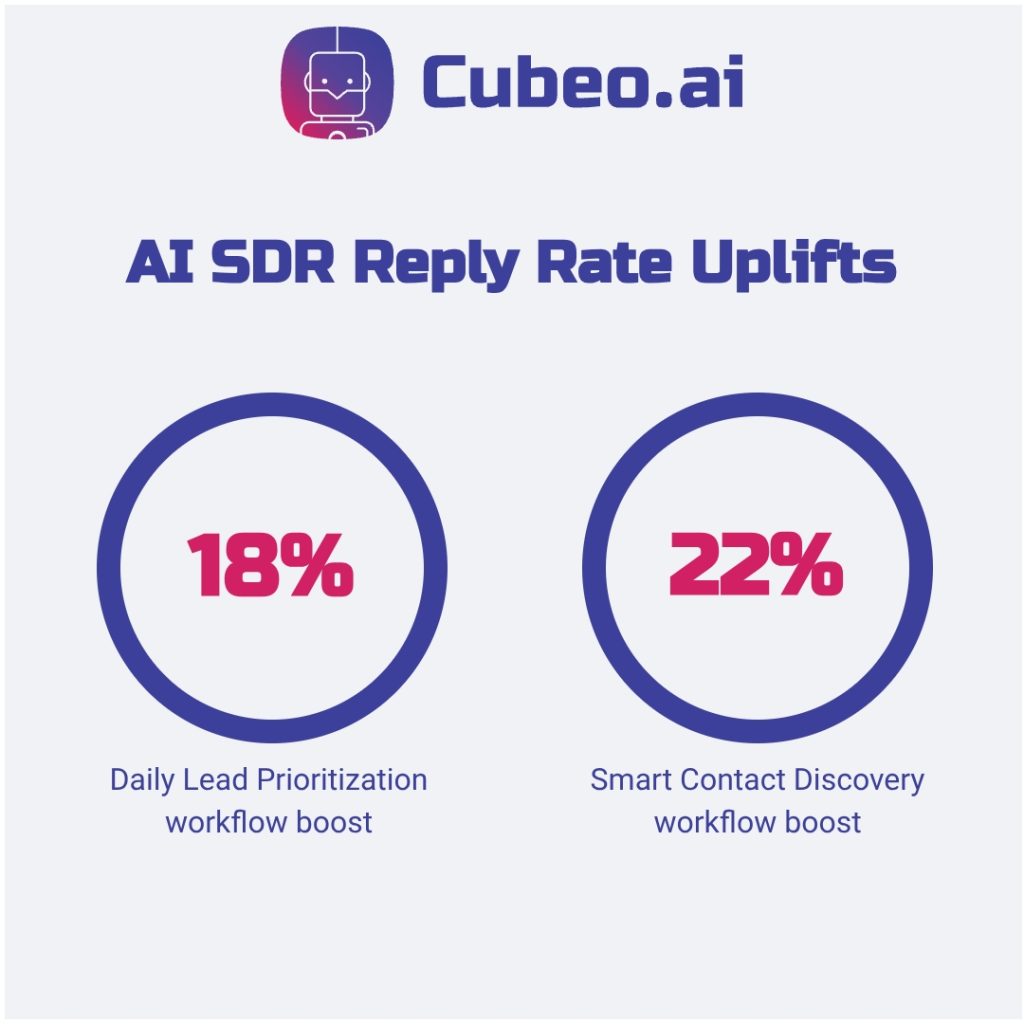
Automated Daily Lead Prioritization
Manual lead selection wastes time and dilutes focus. Research shows 71% of sales teams now use AI-powered lead prioritization, and those teams report a 32% increase in sales conversions.
Smart Contact Discovery Within Target Accounts
Finding the right stakeholder inside complex accounts creates bottlenecks. SDRs spend 30 to 40 minutes per account switching between LinkedIn, websites, and enrichment tools. Companies adopting AI-driven lead scoring report 20-30% higher conversion rates and an average ROI of 138%.
Account Research and Personalization
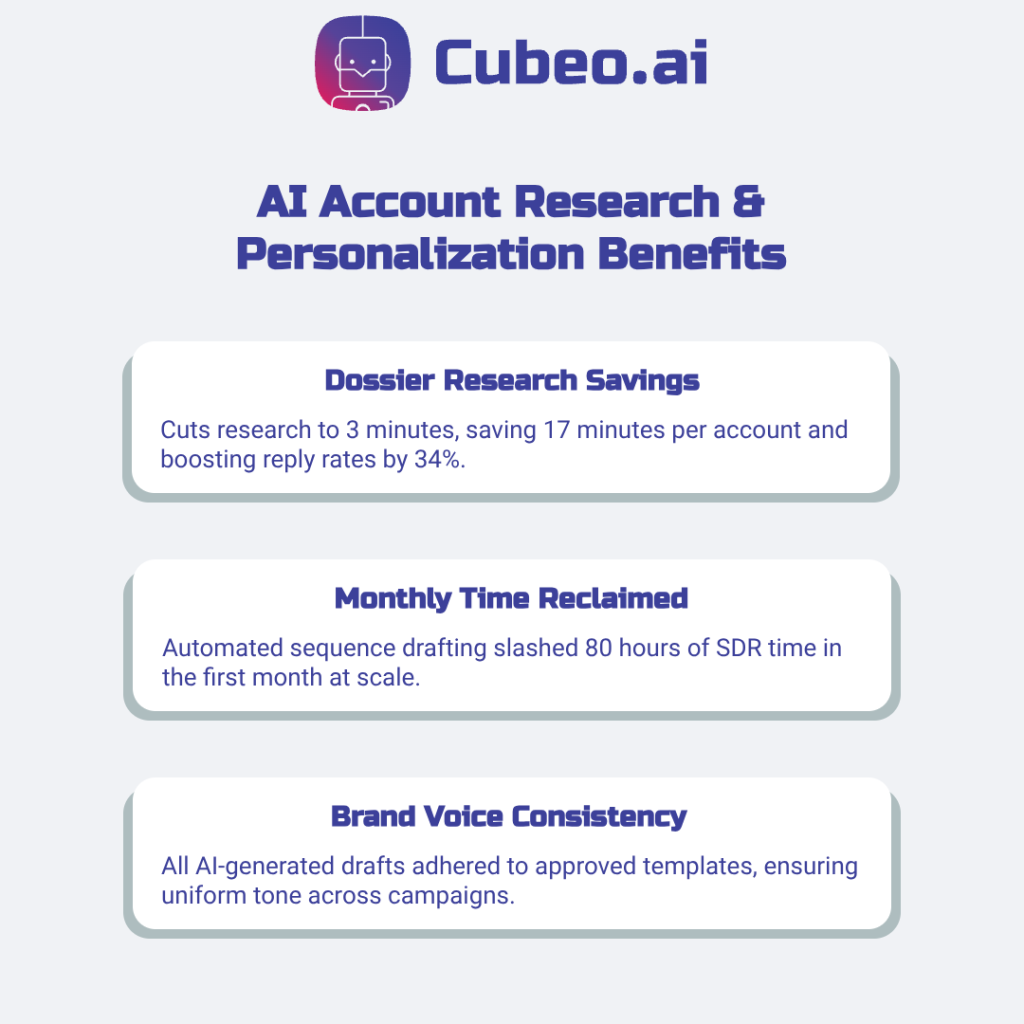
Tab hell kills momentum. SDRs open 10 or more tabs per account while research costs 20 minutes or more. Agentic AI is projected to handle 15% of daily work decisions by 2028, and early adopters already compress account research to under three minutes. Dossier Builder and Outreach Drafter workflows save roughly 17 minutes per account and lift reply rates when messages cite verifiable pain points.
Automated Account Dossier Generation
The Account Dossier Builder creates one-page summaries with company background, news, tech stack, pain points, and suggested angles (draft-first; approval before use; verifiable facts only). Manual research typically burns 15 to 25 minutes per account. Sales teams using automation save 2-3 hours daily, and personalization at scale drives measurably higher conversion rates.
Multi-Touch Sequence Drafting
Sequence writing usually costs 25 minutes per campaign, and quality varies across team members (draft-first default; no auto-send; frequency caps and compliance checks enabled). Use draft-first generation to scale quality without risk.
Engagement and Follow-Up
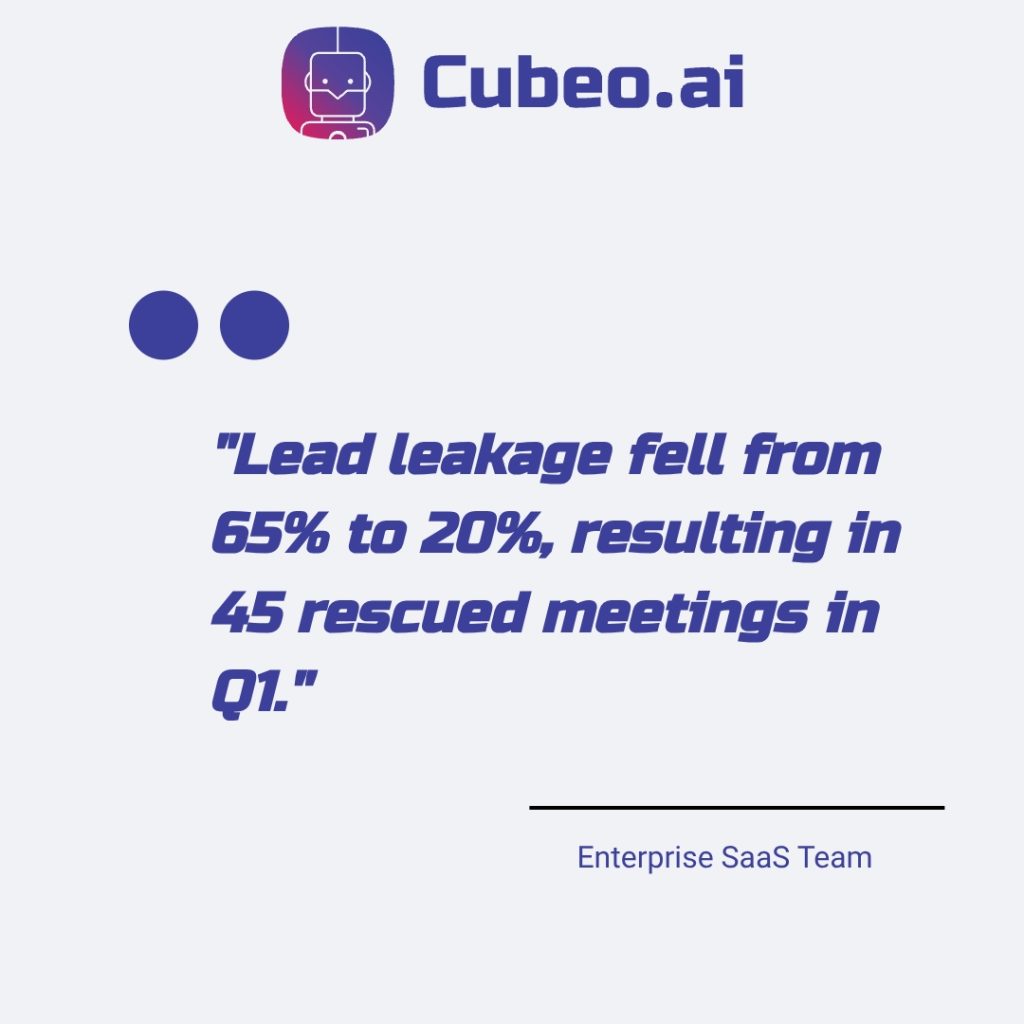
Lead leakage costs pipeline. Roughly 60 to 70 percent of prospects go silent because reps miss follow-ups or forget timely check-ins. A system of AI agents + integrations detects stalled conversations and automates context-aware follow-ups while managing meeting confirmations and reminders.
Intelligent Follow-Up Management
Result: lead leakage fell from 65 percent to 20 percent; stalled-to-replied conversion reached 18 percent, producing 45 meetings in Q1 from otherwise lost pipeline. Context: enterprise SaaS company with long sales cycles (three to six months).
Stalled conversations drain pipeline quietly. SDRs lack time to track every dormant thread, and manual follow-up queues grow overwhelming.
No-Show Prevention and Meeting Preparation
Result: no-show rate dropped from 28 percent to 12 percent; scheduling time fell from 12 minutes to under four minutes per meeting; team booked 40 percent more meetings monthly with same headcount. Context: marketing agency selling consulting services with high demo no-show rates.
Post-Conversation Workflows
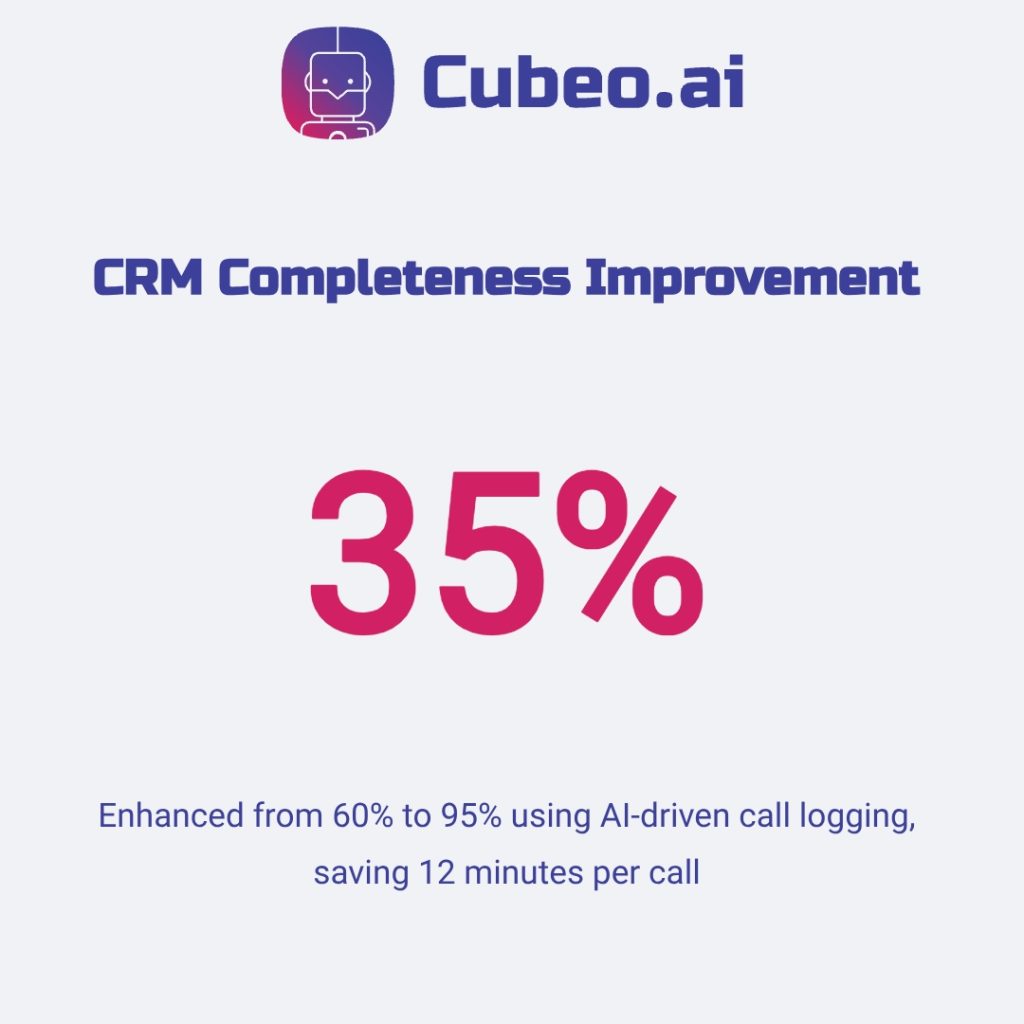
Critical details vanish after calls. SDRs lose roughly 30 percent of key information when logging manually, and vague handoffs waste 20 to 30 minutes of AE prep time per meeting. Call Copilot and AE Handoff Writer automate post-call admin and compile complete context briefs. You can pilot these workflows to improve CRM completeness by roughly 35 percent and save AEs 20 minutes per handoff while boosting meeting-to-SQL conversion rates.
Automated Call Logging and Note-Taking
Reclaim 12 minutes per call (roughly 40 hours weekly for 200 calls) and boost CRM completeness from 60 percent to 95 percent. AI automation saves ~12 minutes per call in logging time and improves CRM completeness from ~60% to ~95%, while meeting-to-SQL conversion increases ~15% with better handoff context.
Seamless AE Handoff Creation
Cut AE prep time from 25 minutes to five minutes per handoff and increase show rates by 22 percent. In B2B SaaS deployments with SDR-to-AE handoffs at SQL stage, vague handoffs like “they’re interested” waste AE time and hurt conversion. Roughly 25 percent of handoffs lack critical qualification context. Median payback period for AI investment is 5.2 months with a 317% annual ROI.
Data Hygiene and System Optimization
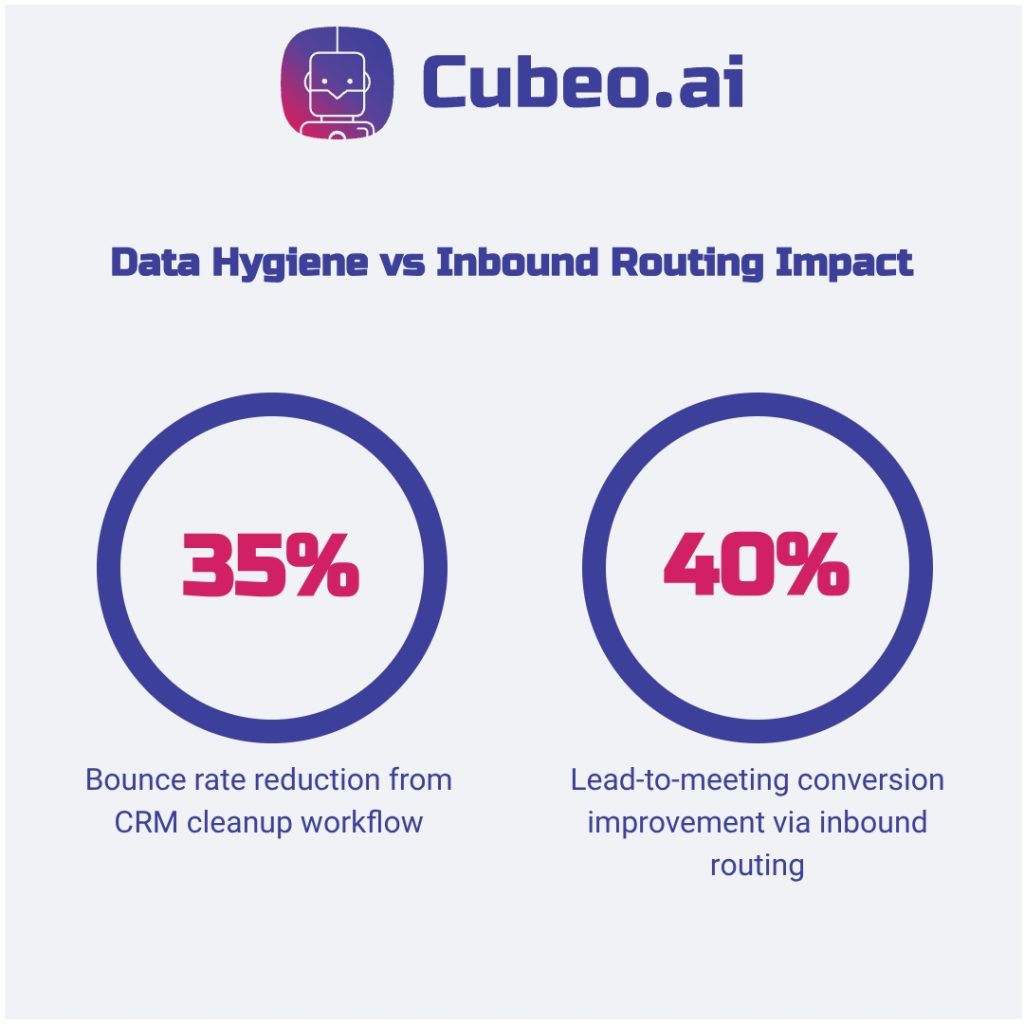
Dirty data kills trust. Roughly 25 to 40 percent of CRM records contain inaccurate or incomplete information, and slow inbound response costs conversions. Phased implementation of CRM Hygiene Bot and Inbound Lead Router workflows tackles both problems systematically. Businesses that improve CRM data quality report up to 29% sales increases and 34% productivity boosts, making data hygiene a revenue lever worth your attention.
Automated CRM Data Enrichment and Cleanup
SDRs waste 15 to 20 percent of their time on manual data cleanup instead of selling. One B2B services company with 50,000 contacts saw duplicates hide real pipeline size and make forecasts noisy. Invalid emails harmed sender reputation and bounce rates climbed.
Inbound Lead Routing and Response
Compress lead response time from 4.5 hours to eight minutes and boost conversion rates by 40 percent. High-velocity SaaS companies with 300+ monthly inbound leads face manual routing errors and delayed first touches. Calling a new lead within 5 minutes increases connection chances by 10x compared to waiting an hour, yet 35 to 50 percent of inbound leads wait four or more hours for first response.
Getting Started with AI SDR Use Cases
Start small. Pick one or two use cases that address your biggest pain point. Most teams begin with account research automation (Dossier Builder) plus sequence drafting (Outreach Drafter). Automate research and writing for existing pipeline before expanding to full workflow coverage.
Crawl, walk, run. Phase 1 (Month 1): Draft-only mode where you approve everything the agent suggests — expect 50 to 70 percent time saved on research and writing tasks. Phase 2 (Months 2-3): Auto-send for 30 to 50 percent of low-priority leads while keeping human review for high-value accounts. Phase 3 (Month 4+): Full automation for over 70 percent of top-of-funnel tasks so humans focus on qualified conversations. Typical payback periods range from 3-9 months, with hybrid models achieving faster ROI.
Measure what matters. Track time saved (hours per week per SDR) plus funnel lift (reply rate, meeting rate, show rate). Monitor these weekly during pilots to catch issues early.
These agents remove research, drafting, and scheduling overhead so reps spend more time on live conversations and deal-building. Start with one use case, prove value, scale from there.
FAQ
What is an AI SDR and how does it work?
An AI SDR (Artificial Intelligence Sales Development Representative) is a software tool that leverages AI to automate critical early-stage sales activities like prospecting, lead qualification, and outreach. It functions as a tireless digital assistant, working 24/7 to manage a high volume of leads and streamline sales processes.
AI SDRs integrate machine learning, natural language processing (NLP), and workflow automation to mimic and enhance the tasks of human SDRs. They can autonomously manage the entire top-of-funnel process, from identifying potential leads from various data sources (like LinkedIn or company websites) to engaging them through personalized emails and follow-ups. By continuously optimizing messaging based on performance data and evaluating response intent, these systems can qualify leads in real-time. This automation allows for consistent, personalized, and high-velocity outreach, ensuring no lead slips through the cracks due to capacity limitations.
Implementing an AI SDR frees human sales teams from repetitive, time-consuming tasks like data entry and basic outreach. This enables human reps to focus on higher-value activities such as building relationships, handling complex objections, and closing deals, ultimately enhancing overall sales productivity. The best way to leverage an AI SDR is not as a replacement, but as an integral part of a hybrid sales team, where AI handles the scale and initial qualification, while humans bring the nuanced understanding and strategic problem solving to advance opportunities.
Can AI SDRs replace human sales reps?
AI SDRs are designed to augment and enhance the capabilities of human sales reps, not to replace them. While AI excels at automating repetitive, data-heavy tasks, human SDRs remain crucial for building relationships, exercising emotional intelligence, and tackling complex problem-solving.
The debate isn’t about AI SDRs versus human SDRs, but rather AI plus SDRs. AI SDR tools handle the “heavy lifting” of lead qualification, initial outreach, follow-up sequencing, and engagement tracking with unparalleled efficiency and scale. This allows human sales reps to redirect their focus to high-value activities that require empathy, creativity, and strategic decision-making, such as deep conversations, objection handling, and closing complex deals. Companies utilizing both AI and human SDRs report significant increases in sales productivity and customer satisfaction, demonstrating the power of this collaborative model.
For a production-ready sales operation, leveraging AI SDRs means human teams gain valuable time back to focus on building authentic connections and navigating nuanced sales cycles. It’s about optimizing the entire sales process to drive measurable outcomes like improved conversion rates and increased sales efficiency. By clearly defining which tasks AI handles (e.g., initial touch, data crunching) and which human reps own (e.g., relationship building, strategic planning), organizations can create a more effective, scalable, and ultimately, more human sales strategy.
What tasks can AI SDRs automate?
AI SDRs can automate numerous time-consuming, top-of-funnel sales tasks, including lead research, qualification, personalized email and phone outreach, follow-ups, meeting scheduling, and CRM updates. This automation frees human reps to focus on higher-value sales activities.
These intelligent agents leverage machine learning and natural language processing to manage the early stages of the sales process autonomously. Key tasks include scraping public data sources to build dynamic lead lists that match ideal customer profiles, sending tailored outreach messages at scale, and continually optimizing communication based on engagement data. They also handle the critical, yet often manual, work of lead qualification by analyzing intent and routing promising opportunities to human sales reps. Furthermore, AI SDRs can manage the intricate process of scheduling meetings by integrating with calendars and ensuring seamless handoffs, minimizing administrative overhead.
By offloading repetitive tasks, AI SDRs directly contribute to improved sales team productivity and efficiency. This allows human SDRs to focus on impactful interactions like building rapport, understanding complex customer needs, and navigating sales conversations. The ability to automate tasks like personalized outreach at scale means a wider net can be cast with greater precision, leading to a higher volume of qualified interactions and ultimately, faster pipeline progression. It’s about enabling a production-ready sales engine where the system handles the churn, and humans drive the conversion.
What guardrails prevent AI SDRs from making mistakes?
Guardrails for AI SDRs are crucial preventive safety controls that constrain the AI’s behavior within defined policy boundaries. These include clear instructions for tone, messaging, lead handling, and operational boundaries, ensuring outputs align with brand voice and compliance requirements.
To ensure AI SDRs operate reliably in production, a robust system of guardrails is essential. This involves defining specific input guardrails that filter and validate prompts, processing guardrails that control the AI’s access to context and tools, and output guardrails that evaluate and potentially modify or block the AI’s responses before they reach a prospect. These guardrails prevent issues like inappropriate messaging, incorrect lead routing, or non compliant outreach. Effectively, they establish the “operational boundaries” for the AI, similar to how an operator sets clear parameters for any automated system, ensuring predictable and brand-consistent behavior even with non-deterministic AI.
Implementing AI SDRs requires treating them like new team members who need clear onboarding and ongoing supervision. This means providing comprehensive training data, including product details, ideal customer profiles, and a defined tone of voice. Continuous monitoring and weekly reviews of message quality, response handling, and lead flow are vital to identify and adjust any deviations from desired performance. By applying these layers of control—from initial setup with defined policies to ongoing monitoring and optimization— teams can ensure their AI SDRs consistently deliver high-quality, compliant outreach and contribute effectively to measurable business outcomes without risking brand damage.