
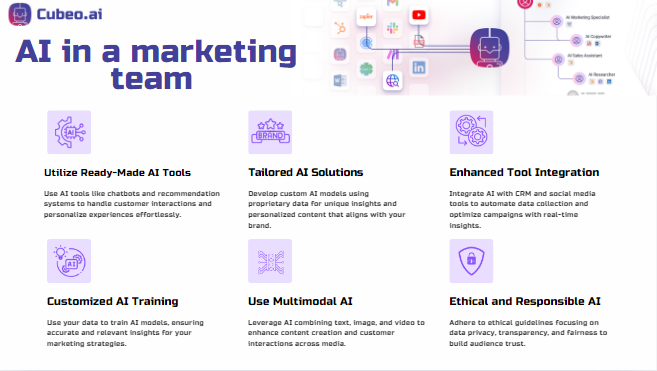
Embracing AI in Marketing
Imagine a future where 95% of marketing work is powered by AI. Well, according to Sam Altman from OpenAI, that future might be just around the corner.
As a digital marketer, your day involves tasks like creating content, analyzing data, and managing campaigns, which can often be overwhelming. However, AI is transforming the marketing landscape by streamlining workflows and boosting efficiency. AI tools are becoming essential, helping marketers accomplish more with less effort.
How AI Enhances Marketing Efficiency
AI not only simplifies your workload but also enhances your marketing strategies. Mailchimp reports that 88% of marketers believe that to stay competitive and meet their customer’s expectations, they must implement AI technology.
So, what are the ways AI can improve marketing efficiently? Let’s dive in:
- Streamlined Content Creation
Creating content is time-consuming, but AI tools can draft social media updates, ad copy, and more, ensuring everything is optimized for SEO and tailored to audience preferences.
Example: Need to create a month’s worth of social media content? AI can draft engaging posts and suggest relevant hashtags, saving valuable time for strategic planning. Influencer Marketing Hub reports that 44% of marketers use AI for content production, highlighting its significant impact on streamlining this process.
- Data-Driven Insights
Understanding campaign performance and customer behavior is crucial. AI-powered analytics transform complex data into actionable strategies, providing deep insights into every aspect of your marketing efforts.
Example: Running an email campaign? AI analytics tools track open rates, click-through rates, and conversions, offering suggestions for improvement and predicting future trends. McKinsey finds that companies using AI for data analysis are 44% more likely to outperform their competitors. Additionally, 64% of marketers view AI as very or critically important for success in the coming year.
- Personalized Marketing at Scale
Personalization is key to customer engagement. AI enables marketers to deliver highly personalized messages and offers based on individual customer profiles, significantly boosting engagement and conversion rates.
Example: Launching a new product? AI customer engagement tools can segment your audience and send personalized emails, each tailored to the recipient’s past interactions and preferences. Accenture states that nearly 70% of users believe AI can outperform humans in task-specific roles, including customer interactions. Additionally, 26% of B2B marketers who applied AI in their marketing activities saw a 10-20% increase in leads.
The Perfect AI-Marketing Partnership
Integrating AI into marketing strategies isn’t just about improving individual tasks; it’s about creating a cohesive, intelligent system that enhances overall marketing efficiency and effectiveness. Here’s how AI can form the perfect partnership with marketing:
• Improved Decision Making: AI tools predict market trends, understand customer sentiment, and identify high-performing strategies, allowing for more accurate campaign planning.
• Enhanced Customer Experiences: AI ensures every customer interaction is relevant and timely, from personalized recommendations to responsive customer service bots.
• Increased Efficiency: Automating repetitive tasks like scheduling posts and sending follow-up emails frees up time for creative and strategic initiatives.
Tips for Integrating AI into Your Marketing Strategy
While AI might seem a bit sci-fi, it’s incredibly accessible. You can start experimenting with AI tools without massive upfront investments. You can start small, focusing on the areas with the most impact can make the process manageable and highly effective:
• Start Small: Begin with one or two AI tools that address your most pressing needs, like a Researcher Agent or analytics tool.
• Train Your Team: Ensure team members understand how to use AI tools effectively by providing training sessions and resources.
• Monitor and Adjust: Regularly review AI tool performance and adjust your strategies. AI is powerful but most effective when continuously optimized.
Ethical Considerations and Risks
Generative AI can bring risks related to ethics, intellectual property, and bias. To mitigate these, remember:
• Humans must regulate AI.
• Identify relevant risks before implementation.
• Ensure responsible use with transparency, trust, and security.
• Marketing leaders must ensure responsible use, consider data and asset management, skills development, and capacity planning.
Looking forward, the real challenge is understanding AI’s potential and integrating it strategically. It’s not about isolated use; it’s about how these technologies can collectively address key business objectives. However, what’s crucial is fostering an environment where your team can use and grow their skills and really leverage AI’s capabilities.
Let’s keep pushing the boundaries of what we can achieve with AI in marketing!